

Frontend Hire — Big Wave Digital, a specialist Australian technology recruitment agency, shares a practical, current view on frontend hire.
Noticed Over Coffee — this guide from Big Wave Digital covers noticed over coffee for the Australian technology market. Here is a practical, current view.
When it comes to Frontend Software Engineer Sydney, the difference between a good hire and a great one comes down to judgment. Here is what Big Wave Digital sees in the Frontend Software Engineer Sydney market, and what it means for your team.
I was having coffee with Popey, the founder of ResponderHQ, and the conversation kept circling back to one thing: how a strong platform can quietly change the way emergency resources are managed. It felt like the kind of search where the technical brief matters just as much as the product story. By the time we got into the detail, I could see why the ask for a Frontend Software Engineer Sydney search was going to be more than a standard frontend engineering hire. The platform sat in a space where speed, clarity, and trust were carrying real operational weight.
That was the first sign this would not be a neat, tidy brief. In Sydney hiring, I see plenty of frontend roles that get framed around polish, component libraries, or a neat handoff from design to development. This one had a different shape. Popey was talking about emergency resource management, the kind of product where a screen is not decoration, it is the place where decisions are made under pressure. That changes how I listen to a brief, because the hire has to carry the product, not just the interface.
In this article:
- The brief looked simple until I heard what the platform actually had to do
- Why a Frontend Software Engineer Sydney was never going to be a pure UI hire
- The search got sharper once we defined the real constraints: speed, trust, and operational clarity
- What strong candidates needed to understand before they ever touched the codebase
- The Frontend Software Engineer Sydney brief forced a harder conversation about ownership
- What strong candidates needed to understand before they ever touched the codebase
- The lesson from ResponderHQ that changed how I think about frontend hiring
The brief looked simple until I heard what the platform actually had to do – Noticed Over Coffee – Frontend Hire
On paper, the ask could have been reduced to a familiar label, Frontend Software Engineer Sydney, and a few standard skills. React, modern frontend engineering, a collaborative product team, maybe some exposure to APIs and design systems. That is the kind of shorthand that can make a search feel manageable at first glance. The problem is that shorthand hides the real operating environment, and this platform was built for situations where every click had to make sense quickly.
Popey described a system that helps coordinate emergency resources, which means the user is often not sitting at a desk with time to explore. They are scanning, deciding, confirming, and moving. That is a different product reality from building a dashboard for a lower-pressure workflow. A frontline user does not care whether the codebase is elegant if the interface makes them pause, doubt, or miss a critical step. In this case, frontend engineering was part of the operational backbone.
I keep coming back to a line that Socrates gets credited with, “The beginning of wisdom is the definition of terms.” That sat in the background of this coffee, because the word frontend can mean very different things depending on the company. For ResponderHQ, it meant translating complexity into something calm and usable while the work behind the scenes stayed anything but calm. That is a very different search from finding someone who can make a product visually sharper.
Why a Frontend Software Engineer Sydney was never going to be a pure UI hire – Noticed Over Coffee – Frontend Hire
Once I understood the product, the role opened up in a way that most job ads never do. A strong frontend engineer in this environment has to think about latency, state management, error handling, accessibility, and the emotional load of the user journey. That last part matters more than many founders expect. If the platform is used when the pressure is already high, every delay, every unclear label, every inconsistent interaction adds friction the user does not have time for.
That is where frontend engineering stops being a design layer and starts behaving like decision support. Popey was not describing a team that needed someone to “make it pretty”, he was describing a product that had to be trusted in moments that can carry consequences. I have seen similar patterns in health, logistics, and B2B operations, and the best hires in those spaces tend to be the people who understand that frontend engineering is often the first place a user feels whether a system is reliable.
Harvard Business Review has written for years about how simple interfaces can reduce cognitive load and improve decision-making in complex environments. McKinsey has also noted that digital experiences win when they reduce effort, not when they add more features for the sake of it. Those ideas came to mind because this platform needed both discipline and restraint. The frontend hire would need to know when to simplify, when to surface context, and when not to add another layer of noise.
Churchill’s line, “To improve is to change, to be perfect is to change often,” is overused in business settings, but I think about it differently here. In frontend engineering, small iterative changes can shape how a team uses a product day to day. The right engineer does not just ship screens, they help the product move toward clarity, one decision at a time. For a company like ResponderHQ, that is not a nice-to-have, it is central to the operating model.
The search got sharper once we defined the real constraints: speed, trust, and operational clarity
When we moved from a generic brief into the actual constraints, the candidate profile became much clearer. Speed was one part of it, but not in the loose startup sense of “move fast”. I mean measured responsiveness, fast enough that a user in a live operational setting is not waiting for the interface to catch up. Trust was the second constraint, because if the product is being used to manage emergency resources, the UI has to feel stable even when the underlying workflow is messy.
The third constraint was operational clarity, and that was the one that changed how I thought about the search. Good frontend engineering here had to support fast comprehension. The engineer needed to understand how a user interprets status, hierarchy, alerts, and sequence. In other words, they needed to think in terms of decisions, not screens. I have seen candidates with strong technical depth miss this completely, because they talk in component patterns while the product team is dealing with user confidence.
SEEK has consistently reported that technical candidates are screened heavily on both capability and fit, and LinkedIn’s workplace research keeps pointing to adaptability and communication as critical factors in digital hiring. That lines up with what we saw here. The strongest candidates were not the ones who only talked about tooling. They were the ones who could explain how they would approach ambiguity, stakeholder input, and design trade-offs without losing the thread of user safety or product reliability.
There is another layer in Sydney hiring that I think founders underestimate. A market can give you plenty of “frontend engineers”, but fewer people who have worked in products where mistakes are expensive in a practical sense. That is why the brief needed to name the real environment, not just the stack. Once that was clear, the search stopped attracting generic product builders and started attracting people who had experience in systems where precision matters.
What strong candidates needed to understand before they ever touched the codebase
The strongest candidates needed to grasp the problem space before they got excited about the architecture. They had to understand emergency resource management as an operating system for humans under pressure, not as a feature set. That means asking different questions. Who is using the platform during a busy shift? What happens when the data is incomplete? Which action needs to be visible first, and which action can wait? Those questions told me far more than a list of frameworks ever could.
We also needed people who could work closely with product and design without treating handover as the end of their responsibility. In frontend engineering, the line between design intent and implementation detail is where a lot of quality gets lost. The best candidates saw that line as a shared space. They were comfortable debating hierarchy, copy, loading states, and error handling because they understood those choices affect how confident a user feels. That is not a side issue, it is the work.
At one point Popey put it in plain language, “If the screen slows them down, we’ve lost them.” That sentence stayed with me because it cut through every polished hiring phrase you normally hear. It also narrowed the search in the best possible way. We were not looking for a frontend engineer who could impress in a demo. We were looking for someone who could build confidence into the product, especially when users were under time pressure and the consequence of confusion was real operational drag.
There is a useful lesson in that for founders and hiring managers. When you define the frontend role through product pressure rather than technical fashion, candidate quality changes fast. You start attracting people who ask about edge cases, accessibility, and workflow design. You also filter out people who want a visually neat product but have not thought much about the human cost of friction. In my experience, that filter is one of the best uses of a carefully written brief.
The Frontend Software Engineer Sydney brief forced a harder conversation about ownership
Every strong frontend search eventually reveals an ownership question. Who owns the user experience when the product is under stress? Who notices the quiet failures, the small delays, the places where a user hesitates because the interface has not helped them enough? In this case, the answer could not be left vague. The role needed someone who would take ownership of frontend engineering as a living part of the product, not a ticket queue waiting for direction.
That shift mattered because the founder was not hiring a pair of hands. He was hiring judgment. The candidates who stood out were the ones who could speak about trade-offs with a straight face. They knew that adding another widget might please a stakeholder today and confuse an operator tomorrow. They knew that if the product is meant to improve resource management for emergencies, clarity has to win over novelty almost every time.
McKinsey has repeatedly found that organizations with strong digital execution tend to align teams around customer experience and operational outcomes, not around isolated functional tasks. That tracks here. The frontend hire had to be able to move across product, design, and engineering without losing sight of the user’s actual job. In practice, that means the best person is often a bit quieter than the headline profile suggests, because they spend more time solving than performing.
That was also the point where the search became a better Sydney hiring story than a technical one. The candidate pool mattered, but the more important question was whether the brief reflected the pressure the product carried in the real world. A good Frontend Software Engineer Sydney search should surface people who can translate that pressure into a calm interface. If the brief is too shallow, the hire will be too.
What strong candidates needed to understand before they ever touched the codebase
There was one more layer to this search that I did not want to miss, and it came up when we talked about how the platform would grow. A company that is changing emergency resource management cannot afford a frontend team that only thinks about today’s features. The engineer needed a sense of how to build for scale without turning the interface into a control room nobody can navigate. That balance, between growth and restraint, is where mature frontend engineering shows up.
I kept thinking about a recent ABC News Business piece on Australian-first lawsuit over extreme heat risks in remote public housing. Different sector, different problem, same lesson, systems fail people when design and reality drift apart. Public-facing products can drift too, especially when the team gets excited about capability and forgets the conditions the user is actually working in. For ResponderHQ, the user environment was not forgiving. That made disciplined frontend thinking essential.
There was also a subtle cultural test inside the search. A person can have the right frontend engineering experience and still struggle if they want tidy answers to messy product problems. The candidates who resonated most were comfortable with uncertainty, but they did not romanticise it. They wanted to understand the workflow, the user burden, and the operational consequence before suggesting a solution. That attitude mattered more than any single framework choice.
I find that the best frontend hires often carry a specific kind of humility. They know the user experience is only partly about the pixels and partly about how the whole system behaves. They also know that if the product supports emergency response, even small improvements can make the work easier for people doing hard jobs. That is a better signal than portfolio polish, and it is one of the reasons I now press harder on context when we brief frontend engineering roles.
The lesson from ResponderHQ that changed how I think about frontend hiring
This search changed how I think about frontend hiring because it made the hidden work visible. The frontend hire everyone underestimates is often the person who shapes whether a product feels reliable when it matters most. That is hard to measure if you are only reading a CV or scanning a stack list. It becomes obvious when you understand what the product carries in the real world, and what a user loses if the interface gets in the way.
ResponderHQ reminded me that frontend engineering is not a support act. In the right product, it is a core part of trust. The hire was never going to be won by talking only about React, accessibility, or speed, although those mattered. It was won by defining the role around operational clarity, pressure, and human confidence. Once that shifted, the search got better, the conversations got sharper, and the candidates we engaged understood the environment far more quickly.
Maya Angelou said, “People will forget what you said, people will forget what you did, but people will never forget how you made them feel.” In product terms, that has a direct translation. A user remembers whether a system made their job feel manageable or chaotic. That is why I think the best frontend engineering hires are the ones who can make complexity feel calm without hiding what is underneath.
That coffee with Popey left me with a sharper view of Sydney hiring than I had going in. The companies building important platforms do not need frontend people who chase surface polish. They need people who can carry complexity without leaking it into the experience. For me, that is the real measure of a strong Frontend Software Engineer Sydney brief, and it is the lesson I keep taking into the next search.
The future is bright, let’s go there together!
Thanks for reading,
Cheers Keiran
Big Wave Digital.
Born in Sydney. Built for digital.
Obsessed with tech.
Trusted by the best.
And, most importantly, ready when you are.
“Courage is knowing what not to fear.”
— Plato
Fear slow hires.
Fear bad hires.
Fear wasting time.
But don’t fear reaching out.
We’re right here.
Let us help you build a Brilliant team in Digital.
Big Wave Digital are experts in Digital Recruitment Sydney
At Big Wave Digital, Sydney’s leading digital, blockchain and technical recruitment agency, we have deep connections, experience and proven expertise, and the ability to achieve a win for all parties in the challenging recruiting process. We can connect to highly coveted digital and tech talent with the world’s best employers.
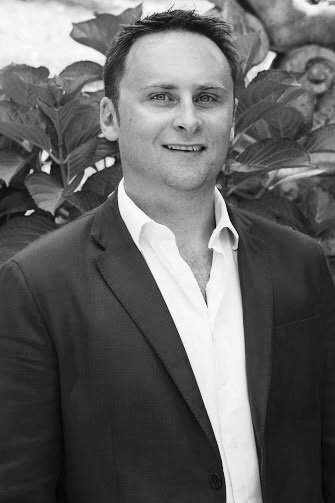
Keiran Hathorn is the CEO & Founder of Big Wave Digital. A Sydney based niche Digital, Blockchain & Technology recruitment company. Keiran leads a high performance, experienced recruitment team, assisting companies of all sizes secure the best talent.
Digital Marketing Recruitment in 2026 Sydney
For wider context on Australian hiring trends, see SEEK’s employment market insights.
When it comes to noticed over coffee, Big Wave Digital brings specialist Australian market knowledge. Getting noticed over coffee right is the difference between a good hire and a great one. Our team works on noticed over coffee every day across Sydney and the wider Australian tech market. If you are weighing up noticed over coffee, talk to a specialist who lives in noticed over coffee. Smart noticed over coffee decisions start with current, local data on noticed over coffee. When it comes to noticed over coffee, Big Wave Digital brings specialist Australian market knowledge. Getting noticed over coffee right is the difference between a good hire and a great one. Our team works on noticed over coffee every day across Sydney and the wider Australian tech market. If you are weighing up noticed over coffee, talk to a specialist who lives in noticed over coffee. Smart noticed over coffee decisions start with current, local data on noticed over coffee. When it comes to noticed over coffee, Big Wave Digital brings specialist Australian market knowledge. Getting noticed over coffee right is the difference between a good hire and a great one. Our team works on noticed over coffee every day across Sydney and the wider Australian tech market. If you are weighing up noticed over coffee, talk to a specialist who lives in noticed over coffee. Smart noticed over coffee decisions start with current, local data on noticed over coffee. When it comes to noticed over coffee, Big Wave Digital brings specialist Australian market knowledge. Getting noticed over coffee right is the difference between a good hire and a great one. Our team works on noticed over coffee every day across Sydney and the wider Australian tech market. If you are weighing up noticed over coffee, talk to a specialist who lives in noticed over coffee. Smart noticed over coffee decisions start with current, local data on noticed over coffee.
When it comes to frontend hire, Big Wave Digital brings specialist Australian market knowledge. Getting frontend hire right matters more than ever in today’s market. Our team thinks about frontend hire every day across Sydney and the wider Australian tech market. If frontend hire is on your mind, talk to a specialist who lives and breathes frontend hire. Smart decisions on frontend hire start with current, local insight into frontend hire. When it comes to frontend hire, Big Wave Digital brings specialist Australian market knowledge. Getting frontend hire right matters more than ever in today’s market. Our team thinks about frontend hire every day across Sydney and the wider Australian tech market. If frontend hire is on your mind, talk to a specialist who lives and breathes frontend hire. Smart decisions on frontend hire start with current, local insight into frontend hire. When it comes to frontend hire, Big Wave Digital brings specialist Australian market knowledge. Getting frontend hire right matters more than ever in today’s market. Our team thinks about frontend hire every day across Sydney and the wider Australian tech market. If frontend hire is on your mind, talk to a specialist who lives and breathes frontend hire. Smart decisions on frontend hire start with current, local insight into frontend hire. When it comes to frontend hire, Big Wave Digital brings specialist Australian market knowledge. Getting frontend hire right matters more than ever in today’s market. Our team thinks about frontend hire every day across Sydney and the wider Australian tech market. If frontend hire is on your mind, talk to a specialist who lives and breathes frontend hire. Smart decisions on frontend hire start with current, local insight into frontend hire. When it comes to frontend hire, Big Wave Digital brings specialist Australian market knowledge. Getting frontend hire right matters more than ever in today’s market.