

I’m seeing more founders assume an Organic Search Specialist is still just an SEO operator. That’s already out of date, and in the Organic Search Specialist market Sydney is feeling that shift earlier than most teams realise, especially once AI-heavy search work starts landing in the hiring brief.
That shift is happening because the role is moving from pure optimisation into something much closer to customer-facing technical problem solving. In the Sydney hiring market, that change is already filtering candidates. The people worth interviewing are usually the ones who can move between technical SEO, content judgement, analytics, and enough commercial confidence to sit with product, dev, and marketing without losing the thread.
I’ve watched this pattern build slowly, then all at once. The old brief asked for rankings, traffic, and a few tidy deliverables. The new brief asks for someone who can understand how search is changing, including AI search roles that sit closer to product and systems than classic channel management ever did.
In this article:
- Why the market is already asking for more than classic SEO skills in the Organic Search Specialist market Sydney
- What Sydney candidates now expect from an Organic Search Specialist role
- Why the strongest people will resist vague briefs and weak ownership
- Is this really an SEO hire, or the start of a broader AI search function?
- What I’d want nailed down before I take this role to market
- Why the Sydney SEO talent market is rewarding clearer teams
- The teams that get this right will brief for the work, not the label
Why the market is already asking for more than classic SEO skills in the Organic Search Specialist market Sydney
The easiest way to see the change is to look at what search now demands. Google’s own AI Overviews, product-led search experiences, and the growing overlap between content discovery and machine interpretation have pushed organic search away from isolated optimisation. A good Organic Search Specialist now has to think about crawlability, structured data, topical authority, internal linking, page intent, content quality, measurement, and how those pieces change when a search engine is summarising, not just listing.
That is why I think so many briefs are starting to read differently, even when the title stays the same. A founder might still say they need SEO support, but the real need often sits in diagnosing why organic visibility is slipping, why content is not being surfaced, why the site architecture is confusing search engines, or why the CMS and dev workflow are slowing everything down. That is a technical problem, a content problem, and a commercial problem all at once.
McKinsey has estimated that generative AI could add between US$2.6 trillion and US$4.4 trillion annually to the global economy, depending on use case adoption and productivity gains. I mention that because it explains why search work is moving up the stack. Once AI changes how people discover information, the organic channel stops being a simple traffic line item and becomes part of how a company is found, understood, and trusted.
That is also why the SEO talent market has become more selective. Candidates with decent keyword work and basic reporting can still find opportunities, but the strongest people are looking for roles where they can influence bigger decisions. They want access to analytics, content strategy, technical fixes, and some say in how search connects to revenue or pipeline. If a brief sounds narrow, they tend to read that as a dead end.
What Sydney candidates now expect from an Organic Search Specialist role

In the Sydney hiring market, candidates have become more aware of the difference between being used and being trusted. They can spot whether a team wants an operator who takes tickets, or a person who can shape direction. That distinction matters more now because the strongest Organic Search Specialist candidates know their work sits across more than one function. They know they will need time with engineers, a voice in content planning, and enough access to data to test whether their ideas are working.
They also expect the role to have a seat near real decisions. If the company treats organic search as a bolt-on, the best candidates will usually pass. If the team already has strong product, content, or engineering functions, they will look for proof that the hire can actually influence those groups. The phrase I hear candidates use more often now is not “what will I own?” but “what will I be able to change?”
LinkedIn and Microsoft have both been signalling how much digital work is being reshaped by AI, with fresh investment and platform moves making it clear that search, discovery, and workplace productivity are being pulled closer together. That matters because candidates can see the direction of travel. If a company is hiring for AI search roles or adjacent work, people want to know whether the business has a point of view or is simply reacting to whatever showed up in the last board meeting.
The other expectation is sharper measurement. The SEO talent market has changed because candidates now know how easy it is for organic work to be judged on lagging metrics that miss the real contribution. Good people want a clean brief on what success looks like, whether that is qualified traffic, conversion quality, technical health, brand discoverability, or content performance by segment. They do not want a vague promise that “we’ll know it when we see it.”
Why the strongest people will resist vague briefs and weak ownership
The best candidates in this space have seen enough weak briefs to smell one quickly. If a role is described as strategic but the company cannot name the current problems, that is a warning sign. If the role is meant to work across product, dev, content, and leadership, but nobody owns final decision-making, that is another. Organic search is already messy enough without adding ambiguity around authority.
I see this especially in teams that have outgrown a generalist marketing model but have not yet redesigned the work. They still want one person to handle audits, technical recommendations, content direction, reporting, and stakeholder management. That can work for a short stretch, but strong candidates know when they are being asked to patch a structural gap rather than build capability. The stronger the person, the less likely they are to accept that load without the right support.
There’s a line from Simon Sinek that gets quoted often, but it lands here because it speaks to confidence in direction, not slogans: “People don’t buy what you do; they buy why you do it.” In hiring terms, candidates apply the same logic to the brief. They want to understand why this role exists now, why it has been framed this way, and why the business believes one person can create momentum across so many moving parts.
Winston Churchill’s line, “However beautiful the strategy, you should occasionally look at the results,” fits the SEO talent market too. Strong candidates are not frightened by ambiguity, but they are wary of teams that have no proof of execution discipline. If the site has technical debt, content that does not map to user intent, and no clear owner for search change management, then the role becomes a cleanup job dressed up as a growth hire.
Is this really an SEO hire, or the start of a broader AI search function?
This is the question I think more Sydney founders need to ask before they write the brief. If the company wants someone to maintain existing organic performance, that is one thing. If the company wants someone to help define how it shows up in AI-assisted search, answer engines, and changing discovery behaviours, that is a different function entirely. The title may stay the same, but the shape of the job changes materially.
That is where the FDE idea starts to feel relevant. A Forward Deployed Engineer embeds with a customer to solve the messy, last-mile problem that stops a product from working in the real world. Search is starting to look a bit like that inside growth teams. The best Organic Search Specialist candidates are becoming the internal equivalent, part technical translator, part problem solver, part practical operator who can work in the gaps between systems.
I do not think every company needs to call it an FDE-style role. I do think the thinking behind it is useful. If AI search roles continue to emerge in Sydney, the best versions will probably sit close to the business rather than hidden inside a silo. They will need to understand the customer journey, the product surface area, the content model, and the technical plumbing that connects them. That is very different from the old image of someone sitting at a dashboard and tweaking metadata.
ABS data shows digital capability remains a major theme across Australian employment patterns, and SEEK’s labour market insights have consistently pointed to strong competition for skilled digital candidates in major cities like Sydney. That lines up with what I am seeing. The market is not short of people who know SEO language. It is short of people who can apply that language inside a broader search and product context.
What I’d want nailed down before I take this role to market
If I were briefing this role from scratch, I would want the business to answer a few things before we spoke to anyone. First, what problem is this hire actually solving right now? Second, where does the role sit in the organisation, and who will they need to influence without direct authority? Third, how much technical access will they have, because an Organic Search Specialist with no path into product or engineering is often being set up to recommend things they cannot implement.
I would also want clarity on the content model. If the company says it values organic growth but has no coherent process for content prioritisation, editorial review, or page ownership, then the role will spend too much time negotiating basics. The best people in the SEO talent market want clean inputs and a live operating rhythm. They are not looking for perfection, but they are looking for a team that can move.
Then there is analytics. Too many organic search roles are still underpowered by data that matters. I would want to know what tools are in play, who owns reporting, what attribution standards the business accepts, and whether the team can distinguish between vanity uplift and commercial impact. If the role is going to touch AI search roles in any serious way, measurement has to be tighter, not looser.
Finally, I would want the company to be honest about whether this is a single-hire fix or the start of a broader capability. If the plan is to build a larger search function, say so. If the role needs to evolve into a hybrid across SEO, content, and technical discovery, say that too. Candidates respect honesty far more than overconfident job language. In this market, clarity is a competitive advantage.
Why the Sydney SEO talent market is rewarding clearer teams

I keep coming back to the same point because it shows up in nearly every search we run. The strongest candidates are not only evaluating the role, they are evaluating the team design behind it. They can tell when a founder has thought through how the work will actually land, and they can tell when a brief was written to sound bigger than the business can support. That is especially true in the Sydney SEO talent market, where good people have enough options to be selective.
When a company is clear, the conversation changes quickly. The candidate can see the scope, the problems, and the shape of the opportunity. They can picture how the role interacts with dev, product, and marketing. They can tell whether the company wants an executor, a strategist, or someone who can bridge both. That is when the better candidates lean in, because they can see where their judgement will matter.
When the brief is vague, the reverse happens. They assume the business is still thinking in old channel terms and has not kept pace with how search is changing. They may still apply, but they will do so cautiously, if at all. The SEO talent market has become more protective of good people’s time, and rightly so. They know that a weak setup can burn through six months before anyone admits the role was underspecified.
That is why I think the phrase “Organic Search Specialist” is becoming too small for some of these briefs. For some businesses it still fits neatly. For others, especially those thinking ahead into AI search roles and customer-facing technical execution, the title is only a starting point. The work itself is expanding whether the org chart has caught up or not.
The teams that get this right will brief for the work, not the label
The companies that win this search will be the ones that understand what the role now sits beside, search, AI, and customer experience, and brief accordingly. They will know that an Organic Search Specialist is no longer only there to optimise pages. They are there to help the business stay visible as discovery changes, to connect content with technical reality, and to work across the messy edges where most growth plans fall apart.
I think that is why this role is changing faster than most teams realise. Search has stopped being a self-contained channel. It is becoming part of how products are understood, how customer intent is interpreted, and how companies show up when the answer is no longer a neat list of ten blue links. Once that happens, the brief has to change too.
In Sydney, the businesses that understand this early will find a better fit, because they will speak to the right kind of candidate in the right way. They will not ask for a classic SEO operator and then quietly expect an AI-aware, cross-functional technical thinker. They will name the work properly, and that gives the role a far better chance of attracting someone who can actually do it.
That is the part I keep returning to. The title may stay familiar for a while longer, but the job underneath it is moving. The teams that recognise that now will make calmer, sharper hiring decisions later, and the ones that don’t will keep wondering why the best people keep walking past a brief that looked fine on paper.
The future is bright, let’s go there together!
Thanks for reading,
Cheers Keiran
Big Wave Digital.
Born in Sydney. Built for digital.
Obsessed with tech.
Trusted by the best.
And, most importantly, ready when you are.
“Courage is knowing what not to fear.”
— Plato
Fear slow hires.
Fear bad hires.
Fear wasting time.
But don’t fear reaching out.
We’re right here.
Let us help you build a Brilliant team in Digital.
Big Wave Digital are experts in Digital Recruitment Sydney
At Big Wave Digital, Sydney’s leading digital, blockchain and technical recruitment agency, we have deep connections, experience and proven expertise, and the ability to achieve a win for all parties in the challenging recruiting process. We can connect to highly coveted digital and tech talent with the world’s best employers.
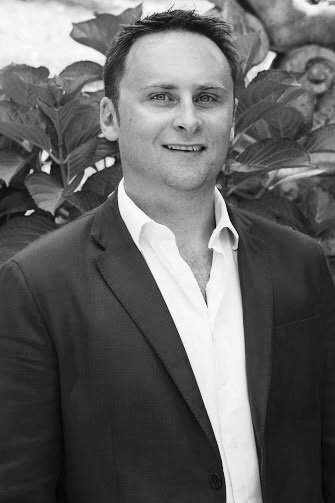
Keiran Hathorn is the CEO & Founder of Big Wave Digital. A Sydney based niche Digital, Blockchain & Technology recruitment company. Keiran leads a high performance, experienced recruitment team, assisting companies of all sizes secure the best talent.
Digital Marketing Recruitment in 2026 Sydney
For wider context on Australian tech hiring trends, see SEEK’s employment market insights.
When it comes to organic search specialist, Big Wave Digital brings specialist Australian market knowledge. Getting organic search specialist right is the difference between a good hire and a great one. Our team works on organic search specialist every day across Sydney and the wider Australian tech market. If you are weighing up organic search specialist, talk to a specialist who lives in organic search specialist. Smart organic search specialist decisions start with current, local data on organic search specialist. When it comes to organic search specialist, Big Wave Digital brings specialist Australian market knowledge. Getting organic search specialist right is the difference between a good hire and a great one. Our team works on organic search specialist every day across Sydney and the wider Australian tech market. If you are weighing up organic search specialist, talk to a specialist who lives in organic search specialist. Smart organic search specialist decisions start with current, local data on organic search specialist. When it comes to organic search specialist, Big Wave Digital brings specialist Australian market knowledge. Getting organic search specialist right is the difference between a good hire and a great one. Our team works on organic search specialist every day across Sydney and the wider Australian tech market.