
When it comes to Google Ads Specialist, the difference between a good hire and a great one comes down to judgment. Here is what Big Wave Digital sees in the Google Ads Specialist market, and what it means for your team.
I’ve been thinking a lot about what hasn’t changed in 16 years, good people still want to be treated properly. What has changed is how quickly strong Google Ads specialists decide a role is worth their time, and that is why the Google Ads Specialist market Sydney teams are dealing with feels tighter than it first appears.
I can see it clearly in paid media hiring conversations. The shortage is real, but the bigger issue is that many teams are still hiring Google Ads specialists as if the market is behaving like 2021. It isn’t. Strong candidates are reading the brief, the flexibility, the team around the role, and the reason for the move before they ever start thinking about whether they want to speak with you.
That shift matters because the market is not just about salary anymore. It is about whether the work feels worth the disruption, whether the role has a clean shape, and whether the person on the other side believes you have thought about their time with the same care you want them to bring to your account. In Sydney, that is where a lot of paid media hiring goes sideways.
In this article:
- The Google Ads Specialist market Sydney teams are hiring into is smaller than it looks
- Why Google Ads specialists are screening you as much as you are screening them
- What Sydney candidates expect now that AI tools have changed the work
- The brief is often the problem, not the talent pool
- What strong hiring leaders do differently when the market feels tight
- What paid media hiring looks like when the market is tight and the brief is clear
- The market has moved on, and candidates can feel it
The Google Ads Specialist market Sydney teams are hiring into is smaller than it looks
People talk about talent pools like they are sitting still somewhere, waiting to be tapped. That is not how the Google Ads Specialist market Sydney employers are dealing with actually behaves. The best people are already employed, already delivering, and usually already fielding interest from more than one team at a time.
There is a broader reason for that pressure. LinkedIn’s Future of Recruiting reports have consistently shown that skills-based hiring is rising, while candidate expectations around flexibility and growth keep climbing. SEEK has also continued to report strong competition across digital and marketing roles in major cities, and Sydney sits right in the middle of that squeeze. When a function is both commercially measurable and easy to compare across employers, the pool feels smaller very quickly.
I think a lot of hiring leaders confuse visibility with availability. You can see Google Ads specialists on LinkedIn, in agencies, in brand teams, in performance shops, and in in-house growth functions, so the role can look plentiful on paper. But once you filter for someone who has real account ownership, can explain performance without hiding behind jargon, and can work with stakeholders who ask hard questions, the field narrows fast.
Harvard Business Review has written for years about the cost of rushed hiring and the value of definition before attraction. That holds up here. If you do not know whether you need platform depth, strategic thinking, client management, or commercial ownership, you end up drawing a wide net that catches a lot of noise and very little of the paid media talent you actually need.
Why Google Ads specialists are screening you as much as you are screening them

The old model treated interviews like a one-way filter. The company assessed, the candidate responded, and then someone decided whether there was a fit. That feels dated now. Good Google Ads specialists are screening the role with the same seriousness you are screening them, because they know how much variation sits inside what sounds like the same job title.
I see this especially with strong paid media talent in Sydney. They are not only asking about channels and account size, they are asking who they will report to, what the first 90 days are meant to change, how decisions get made, and whether the team has a habit of setting people up to succeed or throwing them into unclear territory. Those questions are not hesitation, they are due diligence.
There is a quote from Socrates that keeps coming back to me, “The unexamined life is not worth living.” Hiring has its own version of that. If you have not examined the role properly, the candidate will do it for you. They will pick up on vague outcomes, shaky growth plans, and briefs that sound more like a wishlist than a job.
Strong candidates also know their market value in a non-salary sense. They know that a role with poor internal alignment can damage their year just as quickly as a role that is underpaying, and they know the difference between a business that wants a partner and one that wants a pair of hands. That is why the best conversations in paid media hiring now feel more like mutual assessment than interview theatre.
What Sydney candidates expect now that AI tools have changed the work
AI has changed the texture of the job, even when the title has stayed the same. Google Ads specialists are not only writing ads and managing bids in the way they were a few years ago. They are working with AI-assisted recommendations, automation settings, smarter reporting tools, and broader expectations around how fast they can turn data into action.
That change is feeding into candidate expectations in Sydney. A good specialist wants to know whether your team understands the difference between using AI as support and outsourcing judgment to the platform. They want to know whether the business is curious about experimentation, or whether it is still asking for manual effort because nobody has updated the operating model. The SMH Business piece on AI taking entry-level jobs pointed to a wider pattern, the work is changing quickly, and that pressure reaches right up through the experience ladder too.
Harvard has published plenty on the way automation shifts work from task execution to decision quality. That is exactly what I am seeing in paid media talent conversations. The strongest people are not resisting AI, they are measuring whether the employer understands how to use it without flattening the role into dashboard management.
That is a subtle but important point in the Sydney hiring market. If your brief still sounds like you want someone to “run Google Ads” in the old sense, you may be attracting candidates who are behind the curve, or discouraging the stronger ones who want a role with more strategic breadth. The better candidates now expect clarity on where human judgement sits, where automation sits, and how the two work together.
The brief is often the problem, not the talent pool

I have lost count of the number of searches where the hiring team said the market was weak, then sent through a brief that could not have been used to attract the right person. The language was broad, the scope was muddled, and the outcome was buried under a list of preferred traits that added up to five different jobs.
That is why I keep coming back to the brief. In paid media hiring, the brief is not admin. It is the first test of whether a candidate will take you seriously. If it reads like a compilation of internal hopes, rather than a clear commercial need, then the strongest people tend to move on. They are not being difficult, they are protecting their time.
Simon Sinek’s line, “People don’t buy what you do, they buy why you do it,” applies neatly here. Good Google Ads specialists are trying to understand why the role exists, why it matters now, and why they should move. If you cannot explain that, then your process starts with friction, and the market gives you very little room for that.
The briefs that struggle most often ask for too much certainty too early. They want a candidate who can lift performance, manage stakeholders, tidy up account structure, introduce better reporting, and sometimes rescue a team that has drifted. Any one of those can be a real brief. All of them together can turn a role into a warning sign. The market does not reward vagueness, and it does not reward overreach dressed up as ambition.
What strong hiring leaders do differently when the market feels tight
The teams that land strong Google Ads specialists tend to do a few things consistently well. They tighten the brief before they go to market. They separate the must-haves from the nice-to-haves. They explain the commercial problem in plain English. They also move with enough pace to show the role is real, without making the process feel rushed or careless.
That pace matters more than a lot of leaders realise. In a tight Sydney hiring market, the candidate is often juggling current work, client pressure, and a few live conversations. If your process drags, you do not just lose momentum, you start signalling that the business moves slowly in the places that matter. Strong paid media talent reads that very fast.
There is also a quieter discipline here, and I think it is one of the main reasons some teams keep winning. They do not confuse certainty with control. They know what they need the role to change, but they stay open on how the best person might deliver it. That flexibility matters in markets where the best candidates are already in demand and rarely need to move for a generic title.
Big Wave Digital is turning 16 this year, and I have found myself thinking about what has stayed the same across that time. Deep relationships still matter. Candidate journey still matters. Respecting the person in front of you still matters. What has changed is the speed of decision-making, the volume of noise around roles, and the need for hiring leaders to be far sharper about what they are really asking someone to step into.
What paid media hiring looks like when the market is tight and the brief is clear
When a team gets this right, you can feel it in the process. The role is easy to understand. The commercial problem is stated clearly. The hiring manager knows what success looks like. The candidate can see where they fit without having to decode three layers of internal language. That does not make the search effortless, but it makes it fair, and fairness matters more than a lot of teams admit.
I have seen the difference between a search that is fighting the market and one that is meeting it properly. The first one usually blames scarcity, while the second one learns faster. The first one keeps adding requirements. The second one gets honest about what the role is for. That shift often decides whether the business attracts a competent operator or a genuinely strong Google Ads specialist who can make a difference.
The Australian Bureau of Statistics has continued to show how competitive professional hiring remains across major cities, and Sydney is rarely short of movement. But movement is not the same as fit. Plenty of people are willing to listen. Far fewer are willing to move for a role that feels undercooked, overcomplicated, or disconnected from the real business need.
That is why I keep saying the shortage is only half the story. There is a talent shortage in paid media, yes, but there is also a clarity shortage in how roles are framed. The businesses that solve for both will have a much better chance of attracting the people they actually want, rather than the people who happened to apply.
The market has moved on, and candidates can feel it
What has changed most in the Google Ads Specialist market Sydney employers face is not that candidates have become impossible. It is that they have become more selective in a sensible way. They know the difference between a decent move and a sideways one. They know when a team has thought carefully about the job, and they know when a brief has been assembled in a hurry.
That selectivity can frustrate hiring leaders who are under pressure to fill a seat. I understand that pressure. But if you look closely, the role itself is often doing the talking. Candidates can tell when a business sees them as a growth lever rather than a problem-solver. They can tell when the process is designed around internal convenience instead of mutual fit. They can tell when the account is in better shape than the brief.
There is a line I keep coming back to from Churchill, “To improve is to change, to be perfect is to change often.” Hiring is like that. The teams making progress in paid media hiring are the ones willing to adjust the way they brief, assess, and sell the role. They are not treating change as a concession, they are treating it as part of the job.
I think the teams that win this market will be the ones who stop assuming demand is the problem and start looking at how their role reads from the other side of the table. That is where the real work sits now, in the clarity of the brief, the strength of the story, and the care shown to people who still want to be treated properly.
The future is bright, let’s go there together!
Thanks for reading,
Cheers Keiran
Big Wave Digital.
Born in Sydney. Built for digital.
Obsessed with tech.
Trusted by the best.
And, most importantly, ready when you are.
“Courage is knowing what not to fear.”
— Plato
Fear slow hires.
Fear bad hires.
Fear wasting time.
But don’t fear reaching out.
We’re right here.
Let us help you build a Brilliant team in Digital.
Big Wave Digital are experts in Digital Recruitment Sydney
At Big Wave Digital, Sydney’s leading digital, blockchain and technical recruitment agency, we have deep connections, experience and proven expertise, and the ability to achieve a win for all parties in the challenging recruiting process. We can connect to highly coveted digital and tech talent with the world’s best employers.
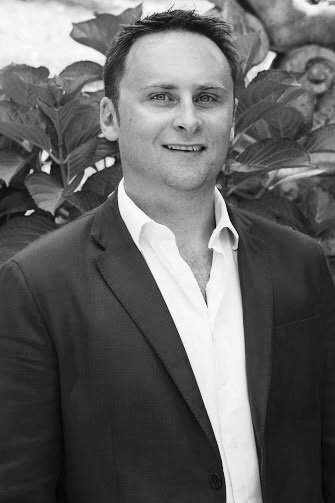
Keiran Hathorn is the CEO & Founder of Big Wave Digital. A Sydney based niche Digital, Blockchain & Technology recruitment company. Keiran leads a high performance, experienced recruitment team, assisting companies of all sizes secure the best talent.
Digital Marketing Recruitment in 2026 Sydney
For wider context on Australian hiring trends, see SEEK’s employment market insights.