
Apply for an AI — this guide from Big Wave Digital covers apply for an ai in the Australian market. Read on for a practical, current view.
Those early hires, the first few people through the door, are decisions that compound. If you’re an AI engineer working out how to sharpen your portfolio before you apply, here’s the standard I’d use: make your work easy to trust, easy to verify, and easy to connect to a business outcome. That’s where portfolio readiness actually starts.
I see a lot of AI engineer candidates assume the interview will be won by technical depth alone. Sometimes that helps, but more often the shortlist comes down to how quickly someone can explain what they built, why it mattered, and how they know it worked. A clean portfolio, a LinkedIn profile that reads like a working professional rather than a keyword dump, and a few sharp case studies can do more for you than another certificate ever will.
There is a reason employers are so sensitive to proof right now. The LinkedIn 2024 Work Change report said 75% of knowledge workers already use AI at work, and that means the bar has moved from “have you used these tools” to “can you show me what changed because you used them.” At the same time, the ABS has continued to show strong demand for digital and tech skills across the economy, which means candidates are competing in crowded, technical pools where evidence matters fast. If you are thinking about AI Engineer Salary Australia searches as part of your job hunt, I’d still start with something more basic, can a hiring manager trust your proof within two minutes of opening your profile?
1. Your portfolio should show problem-solving, not just model names, if you want to improve ai engineer portfolio strength – Apply for an AI
The first thing I look for in a portfolio is whether the candidate can explain the problem before they start listing tools. Too many AI engineer portfolios read like a stack of technology labels, LLM, RAG, vector database, fine-tuning, without enough context around what was broken in the first place. That makes it hard for me to tell whether the candidate understands the work or has only followed a tutorial.
Good portfolio readiness means every project earns its place. Start with the business or product issue, describe the constraints, then show the approach you chose and why. If you built a recommendation system, tell me whether the aim was improving discovery, reducing manual effort, or increasing conversion. If you worked on automation, tell me how much time it saved or what failure rate changed. A recruiter or hiring manager should be able to skim the page and know what mattered.
I’d also keep the portfolio selective. Three well-explained projects beat ten scattered ones. If one project came from a startup environment, one from a larger team, and one from a personal build, that spread can work well because it shows range. But the point is not variety for its own sake. The point is to show that your thinking holds up under different conditions, different data quality, different team structures, and different business goals.
2. If your LinkedIn reads like a tech glossary, you’re making it harder to shortlist – Apply for an AI
LinkedIn is not where you prove everything, but it is often where the first trust check happens. If the profile headline is vague, the summary is stuffed with buzzwords, and the experience section repeats the same tool list over and over, I have to work harder to understand who you are. That friction hurts. The people who get shortlisted fastest are usually the ones who make it easy for me to see what they do in plain English.
Your LinkedIn should reflect portfolio readiness, which means the profile and portfolio should tell the same story. If your portfolio says you built AI features for customer support workflows, your experience section should say that too, not just “worked with Python, AWS, LangChain, and NLP.” Use your summary to answer three practical things, what kinds of problems you work on, what environments you have worked in, and what outcomes you have helped create. That is the level of clarity that stands out.
One thing I tell candidates is to write as if a busy CTO is scanning your profile between meetings, because often that is exactly what happens. Keep the language specific. “Built a retrieval workflow for internal search across 40,000 documents” is far stronger than “improved search with AI.” If you have collaborated with product, engineering, data, or client teams, name that too. Employers want to know whether you can operate in a real environment, not just a lab.
3. Case studies win when they explain the trade-offs, not just the end result
The best case studies show thinking, not theatre. I want to know what options you considered, what you ruled out, and what trade-off pushed you toward the final choice. That is the kind of evidence that builds trust quickly, because it tells me you can reason through messy work, not just present a polished outcome after the fact. Good AI work is full of judgment calls, and your case studies should show some of those calls clearly.
If you say you improved a process, explain what the baseline looked like, how you measured the shift, and what went wrong along the way. Maybe the first model was too slow, maybe the data was thin, maybe the output quality was inconsistent until you changed the prompt structure or the evaluation method. That detail matters. A case study that admits limitations can still be strong, because it shows you understand the edges of the work. A spotless story with no tension often reads as shallow.
Harvard Business School has written extensively about the value of structured reflection in learning and decision-making, and that idea maps well to interviews. Candidates who can explain why they made a choice, not just what they built, tend to land better with technical interviewers. In practical terms, that means you should be ready to talk through the trade-offs in your case studies without sounding rehearsed. If you can explain the compromise, the interviewer can trust the judgment behind the work.
4. The best AI engineer candidates make their impact measurable before the interview starts
This is where many strong candidates lose ground. They have done good work, but the evidence stays vague. “Improved efficiency,” “supported automation,” and “helped scale a feature” do not give me much to work with. Measurable impact does. Even if the numbers are approximate, grounded detail is better than abstraction. If you reduced manual review time by 30%, say that. If you improved accuracy on a defined test set, say how you measured it. If you launched a proof of concept that moved into production, tell me the sequence.
When I review candidates, I am looking for a line between the work and the result. That line can run through time saved, error reduction, adoption, reliability, customer response, or faster decision-making. In some roles, the result may be less commercial and more operational, which is fine. Not every AI engineer role is tied to immediate revenue. Still, the evidence should show where the work landed. If the project is confidential, describe the impact in a way that is specific without breaching trust.
There is also a reason this matters in the current job market. SEEK’s employment snapshots have repeatedly shown that employers value candidates who can demonstrate outcomes, not only responsibilities, and that is especially true in technical hiring where the shortlist is often tight. If your portfolio readiness is strong, your numbers do a lot of the heavy lifting for you before the first interview. That is a much easier place to be than trying to convince someone later that your work mattered.
5. If you want to stand out, remove friction from every screening step
When I say friction, I mean anything that makes a hiring manager pause, hunt for context, or guess what you actually did. Missing links, broken demos, unclear project titles, and files buried three clicks deep all slow the process down. In a strong market, that matters more than people expect. Candidates who remove friction move faster because their evidence is easy to consume. That is a practical advantage, not a branding exercise.
Think about every screening step from the other side. Can someone understand your portfolio on mobile? Can they open the link without logging in? Does each project have a one-line summary at the top? Can they tell which work was done solo and which was done in a team? Does your CV point to the same projects as your LinkedIn profile? These details are part of portfolio readiness, and they shape how trustworthy you look before the interview even starts.
I saw a version of this recently when LinkedIn cut 875 jobs globally, a reminder that even the biggest platforms keep adjusting their own workforce and priorities. For candidates, the lesson is not panic, it is clarity. If hiring teams are moving carefully, your materials need to do more of the work. Make it obvious what you built, why it mattered, and how to find the proof. That simple discipline can be the difference between being considered and being skipped over.
6. Build your interview answers from the same evidence you used in your portfolio
Interview questions for AI engineer roles often circle back to the same thing, how you think under constraints. If you have already built your portfolio around problem, approach, trade-off, and outcome, your interview answers become easier. You are not scrambling to invent a story on the spot. You are drawing from a record of work you have already explained well. That consistency is part of candidate interview tips I give again and again because it reduces pressure and improves trust.
I would prepare three stories from your portfolio that you can tell in two minutes each. One should show technical depth, one should show collaboration, and one should show judgment under uncertainty. If an interviewer asks about a project choice or a setback, you want to be able to move quickly from surface detail to the decision behind it. The strongest candidates do not sound memorised. They sound anchored.
Simon Sinek’s line, “People don’t buy what you do, they buy why you do it,” gets used a lot, but in interviews it has a practical meaning. Hiring managers want to understand your reasoning. They are not only assessing whether you have touched the right tools, they are testing whether you can make sensible calls when the brief is incomplete. Your portfolio, LinkedIn, and answers should all point to that same habit of thinking.
If you have not reviewed your materials in a while, this is where I would start. Ask whether a stranger could tell, in under two minutes, what you have built and why it matters. If the answer is no, your portfolio readiness needs work before your next application goes out.
7. A calm final check before you apply
Before you submit anything, open your portfolio and LinkedIn side by side. Look for gaps between them. Look for claims that need proof. Look for projects that sound impressive but do not explain the result. Then trim the noise. I would rather see a candidate with four clear pieces of evidence than one with a long list of tools and no story around them.
That is what makes candidates stand out in AI hiring. Not volume, not jargon, not trying to sound bigger than the work. It is the ability to make your evidence easy to trust. If you can show what you built, why it mattered, how you approached the trade-offs, and where the outcome landed, you are giving the interviewer a much easier path to saying yes.
When I think back to those three people carrying monitors into the startup on Crown Street, that is the part that stays with me. Early teams do not get the luxury of vague proof. They need people who can show their work clearly and think with enough care that the next decision becomes easier. If you want to improve ai engineer portfolio quality before your next application, keep your evidence clean, your story tight, and your impact easy to verify. That is what earns attention fast.
The future is bright, let’s go there together!
Thanks for reading,
Cheers Keiran
Big Wave Digital.
Born in Sydney. Built for digital.
Obsessed with tech.
Trusted by the best.
And, most importantly, ready when you are.
“Courage is knowing what not to fear.”
— Plato
Fear slow hires.
Fear bad hires.
Fear wasting time.
But don’t fear reaching out.
We’re right here.
Let us help you build a Brilliant team in Digital.
Big Wave Digital are experts in Digital Recruitment Sydney
At Big Wave Digital, Sydney’s leading digital, blockchain and technical recruitment agency, we have deep connections, experience and proven expertise, and the ability to achieve a win for all parties in the challenging recruiting process. We can connect to highly coveted digital and tech talent with the world’s best employers.
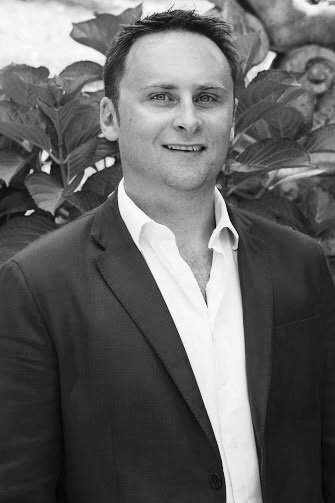
Keiran Hathorn is the CEO & Founder of Big Wave Digital. A Sydney based niche Digital, Blockchain & Technology recruitment company. Keiran leads a high performance, experienced recruitment team, assisting companies of all sizes secure the best talent.
Digital Marketing Recruitment in 2026 Sydney
Big Wave Digital is a specialist Australian technology recruitment agency. If apply for an ai is relevant to your hiring or career, our team can help — that is exactly what apply for an ai work like this is about.
For more on apply for an ai, talk to Big Wave Digital. As specialists in apply for an ai, we help employers and candidates across Australia get apply for an ai right.
See also our profile on LinkedIn for more on apply for an ai.
Explore more Apply for an AI insights on the Big Wave Digital blog.
When it comes to apply for an ai, Big Wave Digital brings specialist Australian market knowledge. Getting apply for an ai right is the difference between a good hire and a great one. Our team works on apply for an ai every day across Sydney and the wider Australian tech market. If you are weighing up apply for an ai, talk to a specialist who lives in apply for an ai. Smart apply for an ai decisions start with current, local data — exactly what this apply for an ai guide gives you. When it comes to apply for an ai, Big Wave Digital brings specialist Australian market knowledge. Getting apply for an ai right is the difference between a good hire and a great one. Our team works on apply for an ai every day across Sydney and the wider Australian tech market. If you are weighing up apply for an ai, talk to a specialist who lives in apply for an ai. Smart apply for an ai decisions start with current, local data — exactly what this apply for an ai guide gives you. When it comes to apply for an ai, Big Wave Digital brings specialist Australian market knowledge.